Does Nachiket Mor Committee report impress to deceive?

One of the first initiatives that the new RBI Governor Mr Raghuram Rajan took after assuming office a few months back was the formation of the Nachiket Mor committee on “Comprehensive Financial Services for Small Businesses and Low Income Households”.

Now the committee which was set up only in September 2013 has submitted its report at the same speed with which Raghuram Rajan displayed on the licensing of new banks. RBI released a copy of the report on january 7th for public comments. The Comments may be emailed or sent by post to the Principal Chief General Manager, Rural Planning and Credit Department, Reserve Bank of India, Central Office, 10th floor, Shahid Bhagat Singh Marg, Mumbai 400 001 on or before January 24, 2014.

The committee has made several radical recommendations and while laying down its vision statement for financial inclusion and deepening, has suggested providing a universal bank account to all Indians above the age of eighteen years and has recommended a Vertically Differentiated Banking System with Payments Banks for Deposits & Payments and Wholesale Banks for credit outreach with relaxed entry point norms of ` 50 crore.

On priority sector, the Committee has recommended Adjusted Priority Sector Lending Target of 50 per cent against the current requirement of 40 per cent with sectoral and regional weightages based on the level of difficulty in lending. The Committee has also recommended risks and liquidity transfers through markets.

The Committee has advocated regulatory convergence between banks and NBFCs based on the principle of neutrality with regard to classification of non-performing assets and the Securitisation and Reconstruction of Financial Assets and Enforcement of Security Interest (SARFAESI) Act, 2002 eligibility.

The Committee has suggested that a State Finance Regulatory Commission (SFRC) be created into which all the existing State Government-level regulators could be merged and functions like the regulation of Non-Government Organisations-Micro Finance Institutions and local Money Services Business could be added on.

The Committee has desired that the Reserve Bank should issue regulations on suitability, applicable specifically for individuals and small businesses, to all regulated entities within its purview so that the violation of such regulations would result in penal action for the institution as contemplated under the relevant statutes through a variety of measures, including fines, cease-and-desist orders, and modification and cancellation of licences.

The recommendations are radical and will have significant impact on the Banking and Financial sector in India and will also significantly affect the stock markets. It will also affect the proposed new Banking licensee aspirants.

In view of the nature of some of the recommendations that may also affect security of public money, it is essential for experts in the field to study the report and submit their comments to RBI in time.

Mr M.S.Sriram, a former professor of IIM Ahmedabad opines has published an interesting article titled “Why the Nachiket Mor committee report on financial inclusion disappoints” in livemint.com which makes a good reading to begin your exploration of the report.

Naavi

Copy of the report is available here.: 

Additional comments of two of the members can be found here:

aap_subsidies

Posted in Bank, RBI | Leave a comment

Abolition of Personal Income Tax

A discussion has now ensued in India about the possibility of personal income tax being completely abolished if BJP comes to power. This proposal though is in the initial stage of discussion and yet to be adopted into the manifesto of the party for the forthcoming Loksabha elections, has already evoked lot of interest both from the economists and politicians.

There is no doubt that the proposal will be received well in those markets where AAP is gaining strength and hence it is a good political policy. However what is also required is to discuss the proposal from the point of view of it’s economic impact.

The undersigned welcomes the move for its revolutionary potential to reform the tax regime in the country. At the same time it is felt that some collateral measures would help in making the proposal work to long term benefits to the economy.

A good perspective on the subject is found in First post which is worth reading.

It is estimated that the current revenue from direct taxes in India is of the order of Rs 250000/- crores.  If therefore the proposal has to be given a serious concern, there has to be counter measures to offset this revenue loss.

It is also expected that if the proposal is introduced,  there will be an increase in the inflow of funds from professionals and businessmen to the Banking sector. (It is expected that the abolition of IT would presently be in the non corporate sector).

It is stated that 99% of the tax payers contribute insignificant amounts to the revenue kitty. It is only the top 4 lakh persons who contribute to the revenue in a significant manner.  Hence the abolition if it comes through will provide relief to early 4 crore voters in India who need not file IT returns. The current regime of Mr PC is obsessed with expanding the tax base and hence has built up a large number of irrelevant tax assessees. These are also the persons who feel harassed when IT officials raise needless queries on trivial transactions. The enormous saving in manpower arising out of leaving the 4 crore assessees from the tax bracket would add to the productivity of the economy.

One suggestion that is being discussed to offset the loss of revenue is an “Expenditure Tax” where a Bank customer would be taxed on the amount of “Net withdrawals from the Banking system”. However such a proposal would be counter productive since it will bring back the problems to the assesses in a different manner. It is therefore better if no such expenditure tax is considered. However there would be some increase in the demand for manufactured goods and an increased inflow in the indirect taxes.

In such a scenario, there would be a need for placing some incentives for public not to spend indiscriminately and adding to inflation. It would therefore be essential to encourage public to retain funds in the Banking system itself. An interest rate regime based on the volume of deposits can encourage increased savings accumulation in the Banks and avoidance of an incentive to have multiple bank accounts and carrying of benami accounts. What this means is that interest rate surcharge is paid to the depositors on the basis of deposit slabs. Eg: Deposits over Rs 1 lakh  will have an incrementa interest of 0.25% over and above the rate otherwise payable. Similarly deposits abo r Rs 5 lakhs can be paid a higher interest of o.5% etc.

At the same time, Banks need to invest the increased funds in a productive manner. For this purpose it would be advisable that the Government/RBI initiates some action on channelising Bank funds to the manufacturing sector by incentivising lending for Capital Expenditure on a long term basis. In other words, term loans for 5+ years to the manufacturing sector need to be encouraged. This can be done by providing some SLR/CLR exemptions based on long term lending to manufacturing sector.

Such a move would also provide a push to the stock markets particularly to the manufacturing sector besides banks.

In summary, abolition of Income Tax is exciting. At the same time some changes in the Banking sector would make it even more exciting.

I wish the think tank of BJP considers such additional proposals for Banking sector reform along with the proposal for abolishing the income tax.

Naavi

aap_subsidies

Posted in Bank, Cyber Law | Leave a comment

Laxmi Coin.. The name is a problem

While there is a discussion on one hand about the RBI regulations on Bitcoins, the promoters of Laxmicoin are reported to be waiting for RBI clarifications for launching their Crypto Currency. (See Economic Times)

Apart from the controversies surrounding Bitcoins in general, Laxmi Coin is likely to encounter another problem of using religious sentiments to promote the coins.

Should the name of the Goddess of Wealth be used for naming a commercial product?… It is worth debating.

Naavi

Posted in bitcoin | 2 Comments

Should You invest in Bitcoins?

bitcoin_digitalThe press conference conducted in Mumbai by the Bitcoin alliance ended up with the media reporting ” Bitcoins Alliance India advices public to keep off, seeks legal clarity” (Economic Times)

Investors need to look at what are the legal and financial risks. After the above announcement, Bitcoin moved up to cross US$1000 again with the announcement that Zynga which manages many of the popular Facebook games accepting Bitcoins for many of the requirements of the games such as Farmville. This development is very significant since this indicates that many other online operators may start accepting Bitcoins. This will lead to an increased demand for Bitcoins and it will possibly ride over the uncertainties arising out of the regulatory caution in India.

To answer the question “Should you invest in Bitcoins?” one has to keep in mind the non financial legal risks. The main legal risk is that purchases  may lead to an investor being in the radar of the Enforcement Directorate. If the purchases are made strictly out of legal funds and the seller is properly identified, the risk should be lower. However if there is any ED enquiry, there could be other unpleasant consequences which an ordinary investor may consider as annoying.

I suppose that it will take a month for the confusion to settle down. However, in the long run RBI may reconcile to the fact that Bitcoin is there to stay as a currency of the virtual world and may not go to the extent of bringing about amendments to law just for the fear of Bitcoins.

Naavi

Posted in bitcoin | Leave a comment

Is Bitcoin going to survive in the long run?

After the high publicity received during what was termed “Global Bitcoin Conference” in Bangalore on 15th December 2013, it was natural that there should be some cooling down of passions. This happened with the twin actions of RBI releasing an advisory and the actions of the ED. Presently the industry has entered into a phase of consolidation.

The current operators seem to have come together to form a lose association and conducted a press conference in Mumbai on the 4th of January 2014. The press conference was aimed at communicating with the RBI  the industry views  on the Bitcoin concept. It has done its bit and it is now time to await the reaction of RBI.

During the conference it appears that the group has indicated that India is estimated to constitute about 1% of the  global market of Bitcoins and the trade is valued at the order of Rs 600 crores and constitutes about 50000 users.

If this estimates are true then there is a definite case for the regulators to show some concern on regulating the industry. Also if in due course other crypto currencies gain ground, the industry may easily become significant enough to regulated.

Regulation per-se is not detrimental to the industry since it will bring order. Whenever a new business idea comes up, in the early adopters there will always be certain irresponsible elements who may create an undesirable public and regulatory perception about the industry. Bitcoin community in India has also been passing through this phase. It is necessary that actions need to be taken to discipline the members and maintain a sense of respectability to the group.

The conference in Bangalore did bring out this need. There was enthusiasm and excitement amongst the young crowd about the concept. But the conference remained largely as a promotional event and failed to initiate an evaluation of the possible future developments. As a speaker I did raise the concerns but it was too late in the day and too little to lead to introspection. As the crowd disbursed in great spirits, they received a  rap on the knuckles through the developments of the last fortnight. This appears to have now driven home a sense of responsibility in the current industry players since most of them are otherwise techies with successful professional careers behind them and who would like to maintain their respectability in the society.

Naavi.org welcomes the current move of the industry players to come together and act responsibly with guidance from the legal fraternity.

I presume that M/S Nishit Desai associates have been retained by the community to represent them in the legal cases that are presently unfolding against some of the members. We can now wait for further developments to play out. Will the ED back out? Or will it take its investigations to the logical end? is the next question to be answered. If the investigations continue there will be an inevitable legal battle which will keep the industry concerned for some time.

It is likely that the issue will now go into hibernation and the activities in Bitcoins will be subdued for some time. In the meantime there will be further developments in the global front too which will be keenly watched by the regulators.  The regulators would also be making their own internal evaluations on the impact of these developments.

The regulator cannot look at this issue as an issue involving only the Bitcoin community. Whatever decision that is taken now will affect the Crypto Currency Industry in general and in due course at least two or three other crypto currencies are likely to emerge as significant players and the net impact of all these crypto currencies need to be taken into account by the regulator before they arrive at their decision on Bitcoin.

In the next two months we can expect some more action in this front which will define the future of Bitcoins in India. How the industry reacts to further developments will determine the maturity of the industry players and their commitment to shape the future.

Will Bitcoins just pass out as a fad? or will it develop roots and grow?… Let’s keep our fingers crossed and watch.

Naavi

P.S: Naavi is not a member of Bitcoin Alliance as has been wrongly reported by The Hindu in one of the recent reports.

Posted in bitcoin | 3 Comments

Press Should not misrepresent Bitcoins

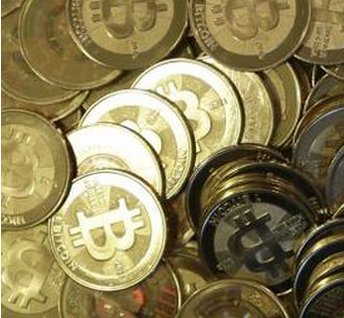
Whenever press writes an article about Bitcoin, they use pictures similar to the following. 

This picture immediately invokes the thought of a fiat currency and regulators start thinking  how anybody can “mint” such coins  without their permission.

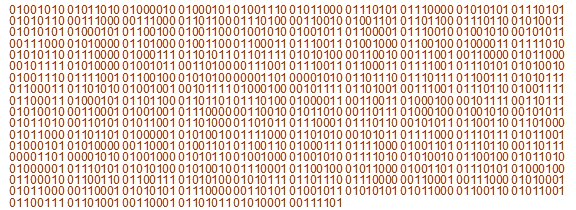
However the correct visual depiction of a Bitcoin would appear more like the following picture.

This is the depiction of an “Electronic Document” in binary language. Bitcoin is actually an electronic document and not a minted metal coin. It is produced through a computer process just like any other electronic document.

If media persons  consistently use  the above picture whenever an electronic document needs to be visualized, then there would be a better understanding of the real nature of Bitcoins (and Crypto Coins in general) and the regulator’s perception may change for the better.

Naavi


Posted in bitcoin | Leave a comment