
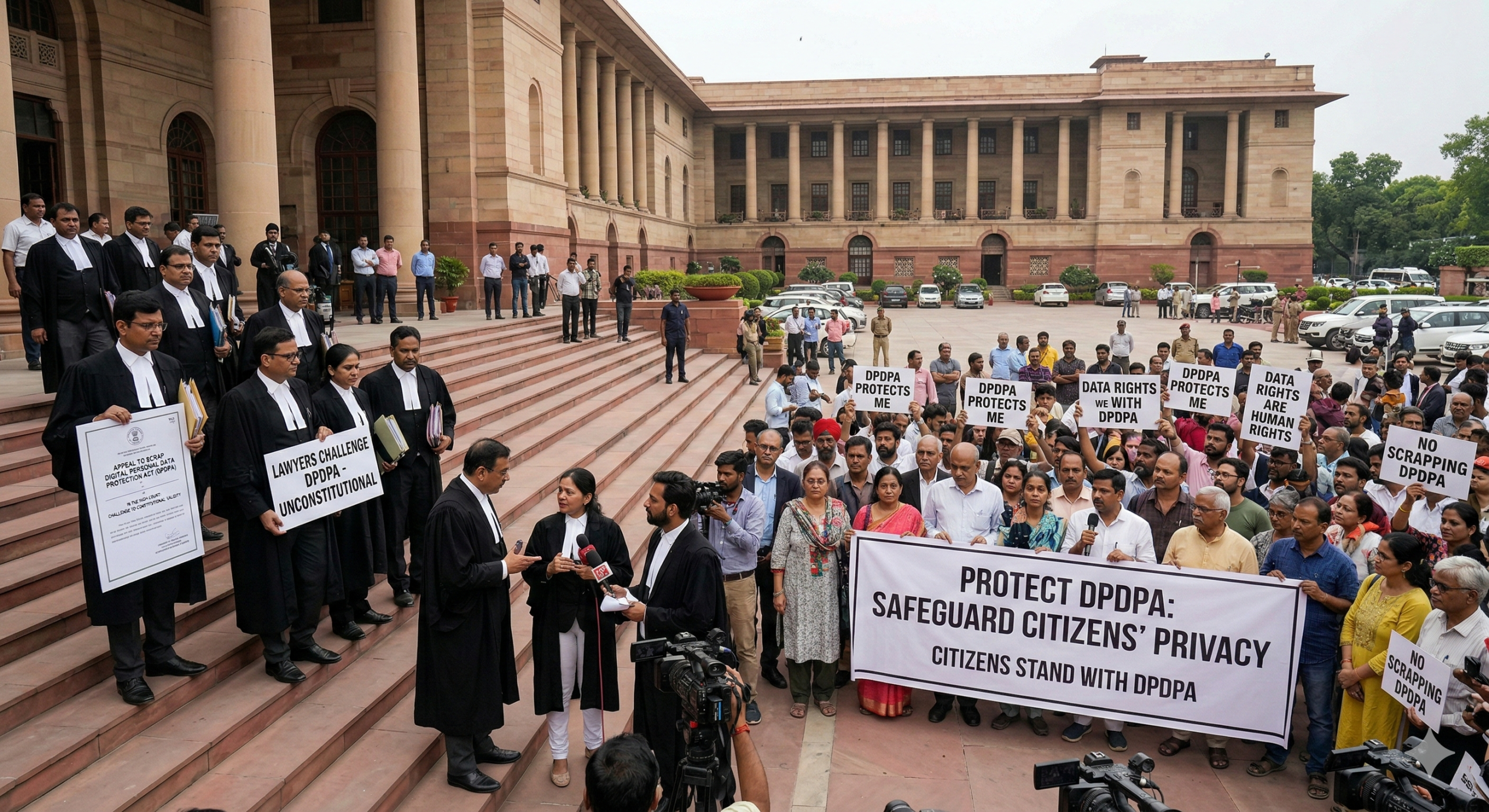
The entire set of articles that we have discussed in the last fortnight on the DPDPA Challenge petitions in the Supreme Court are available here.
Copies of the petitions
Venkatesh Nayak
Reporter’s Collective
These discussions cover the two petitions of Venkatesh Nayak and Reporters Collective Trust. We did not have a copy of the third petition filed by NCPI. The points raised in that petition may not be different and if we get the copy of the petition, we will study that also and present the details.
The objective of these articles is not to criticize learned counsels who are representing the case though we may be using some aggressive statements as part of the presentation.
We however make a specific request to the Supreme Court that in all PIL petitions of this nature an opportunity should be given to the general public to submit their views like what the Supreme Court recently did in the case of Digital Arrest related petitions where an Amicus was appointed to collect the information from the public. This should be a standard practice.
We are specially irked by the fact that instead of restricting the prayers to resolve specific concerns the petitioners were asking for “Stay” and “Scrapping of the Act”. This was unwarranted and lacked responsibility.
India has been waiting for a legislation of this type for a long time and when finally it was in place, trying to scuttle it was not considered a good idea. Hence we had to strongly intervene and put across our views.
We now have placed these views in the public and feel that the Court is obliged to consider this opinion besides what the Government may present. Court should atleast ask the Attorney General whether they have gone through these views.
We have directly kept the Ministry of Information Technology informed about these views and hence it is their responsibility to bring them to the attention of the Court. In the past (eg: Section 66A case) MeitY did not present their case properly and let the section be scrapped. It should not happen this time.
There is no reason to make any changes including in Section 44(3). We have given some suggestions on how the concerns can be addressed and are ready to share more details of how the Data Fiduciaries need to address these issues.
The MeitY, the Attorney General/SolicitorGeneral and the Supreme Court should have an open mind to receive these suggestions and not stand on formalities.
Naavi and FDPPI will continue to take actions required to protect DPDPA and will present more analysis as and when required.
On March 7, FDPPI will conduct a virtual Round Table on the topic, All are welcome. The link to the session is Link to the virtual session is available below
Meeting Id: Zoom: 857 9546 4234
Passcode:dpdpa1






Pingback: FDPPI to collect the Real Public Opinion” on the petition for scrapping DPDPA filed in Supreme Court | FDPPI is your Privacy Companion